


Okay, so check this out—I’ve been poking around centralized exchanges for years, and OKX kept popping up in my feed. Wow! It felt familiar and a little off at the same time. My instinct said: there’s value here, but the UX and risk model deserve a close look. Initially I thought it was just another platform, but then the fees, order types, and liquidity told a different story—one that matters if you trade spot frequently.
Here’s the thing. The basics are straightforward: deposit, pick a pair, and hit buy or sell. Really? Not quite. Market depth, token listings, and routing can change your execution price fast. On one hand, OKX offers competitive spreads; on the other, slippage on low-volume tokens will bite you if you don’t pay attention. I’m biased, but that part bugs me—because I’ve seen small accounts wiped by careless market orders.
So let me walk you through the practical stuff. First: logging in. Whoa! If you’re logging in from a new device, take a breath. Use a strong password and enable two-factor authentication immediately. My first impression when I set up 2FA years ago was: cumbersome—but worth it. Actually, wait—let me rephrase that: it felt inconvenient then, and now I wouldn’t trade without it. Pro tip: keep backup codes somewhere offline. Seriously?
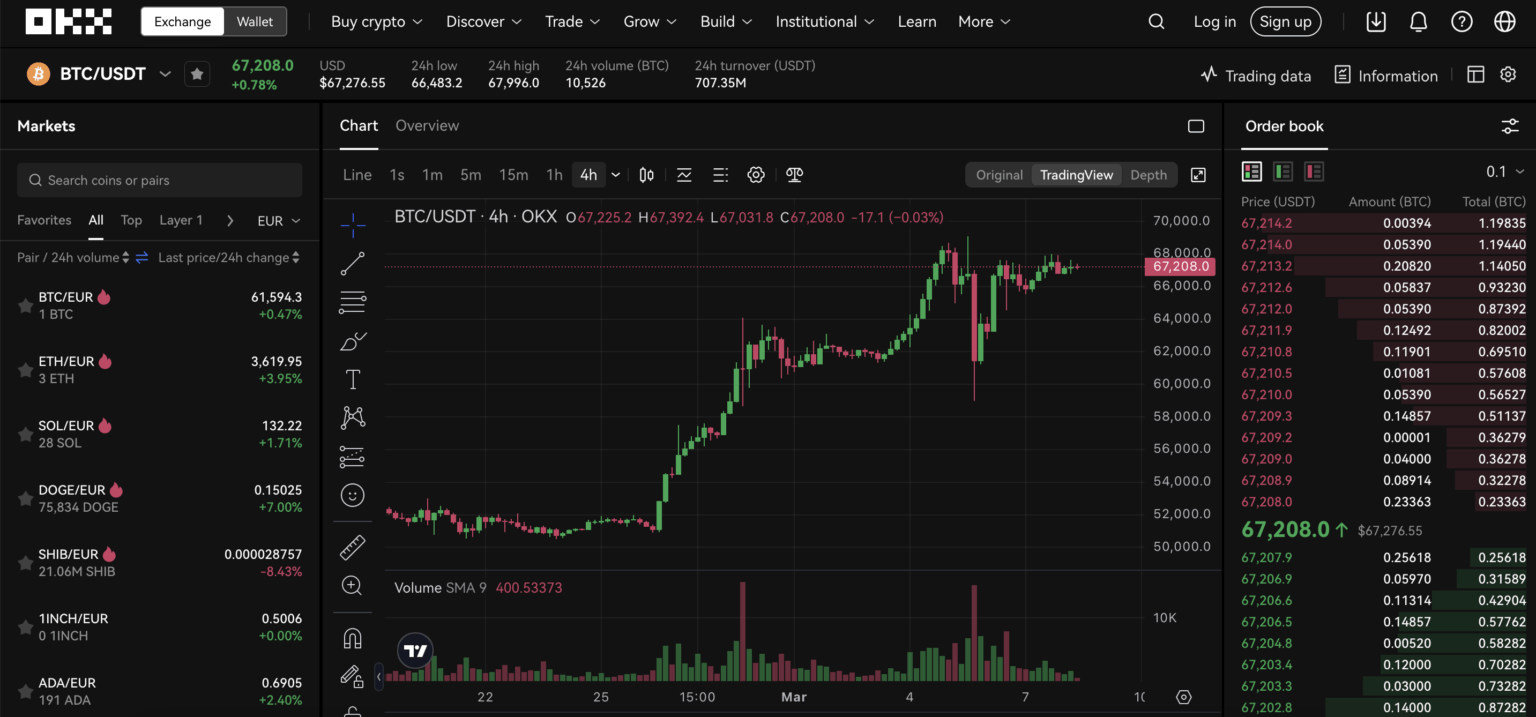
Quick Map: What OKX Spot Trading Gives You
Liquidity on major pairs is solid. Small altcoins vary. Fees are competitive for active traders. Also, order types include limit, market, and advanced conditional orders. Hmm… that mix is useful for scaling in and out of positions. If you care about execution quality, watch the order book depth and maker-taker rebates. My gut feeling: the platform rewards disciplined traders who use limit orders and watch the spreads.
Let me be practical about account safety. Start with a unique passphrase. Enable SMS only as backup—prefer an authenticator app. Consider a hardware key if you hold larger sums. On one hand, email notifications are handy; though actually, email can be phished if you’re careless. So: opt-in for device recognition alerts and session management—log out of devices you don’t recognize.
Logging In: A Step-by-Step That Won’t Waste Your Time
Step 1: Go to the official site. Step 2: Enter credentials. Step 3: Complete 2FA. Okay, but check this—phishing is real. Always verify the URL and SSL lock. If you want a quick login reference, I like this guide on the official helper page: okx. It walks through web login flows and common troubleshooting. Don’t click links in random DMs. Also, don’t reuse passwords.
After login, pause. Scan balances. Review open orders. That short habit saves a lot of headaches. In one case I caught a leftover limit sell that would have executed during a flash dip…phew. Somethin’ like that keeps you humble.
Execution: Simple Tactics That Work
Use limit orders when possible. Market orders are fine for highly liquid BTC or ETH pairs, but they can cost you on thin alt pairs. If you’re scalping, consider time-in-force settings and understand partial fills. Hmm… watching the order book is low-tech but effective—it’s where the real story lives. Traders who ignore it are guessing more than trading.
Layer entries across several price levels. That reduces slippage and smooths your average cost basis. Also—this is subtle—watch funding and staking options on OKX; sometimes you can earn yield on idle assets, which offsets trading fees if you hold between trades. I’m not a financial advisor, but it’s a tactic I use for small balances.
Fees, Limits, and the Fine Print
Fees change. Exchanges update structures. Check fee tiers and your VIP level. Maker rebates can flip your cost curve if you provide liquidity. Deposits and withdrawals may carry network fees—those aren’t controlled by the exchange. On the regulatory side, US users should be careful about available coins and regional restrictions. I’m not 100% sure about every token’s status, so verify what’s allowed in your jurisdiction before you trade.
One more thing—withdrawal limits and KYC. Higher verification levels unlock more features but require more documents. For casual traders, basic KYC works, though it can be annoying to submit paperwork. Double-check your bank or card limits too; sometimes fiat onramps impose their own caps.
Common Mistakes I Keep Seeing
Trading off hearsay. Not checking order book depth. Skipping 2FA. Reusing passwords. Leaving orders open accidentally. These are basic, but they keep happening. Also, chasing low market caps without doing on-chain checks is a fast track to regret. There’s a pattern: people get excited about a token, then ignore liquidity—and then slippage and spreads punish them. It’s very very common.
Here’s a small checklist: verify pair liquidity, set realistic order sizes, use stop-losses or conditional orders for downside, track fees, and keep two accounts or sub-accounts for different strategies (spot vs. HODL stash). Small habits compound.
FAQ — Short answers for busy traders
How safe is OKX for spot trading?
Generally considered safe among major exchanges, with standard security features. Enable 2FA and withdrawal whitelist. No exchange is risk-free, though—practice good custody hygiene.
Can I trade USDT pairs instantly?
Yes for most major tokens, subject to liquidity. During high volatility, expect wider spreads and potential temporary delays on withdrawals due to network congestion.
What order type should a beginner use?
Start with limit orders to control price. Use market orders cautiously and only for high-liquidity pairs or when speed matters more than price.
Alright—final thought. I’m excited about what OKX offers, but cautious too. Trading is part skill and part systems thinking. I’m biased toward disciplined, small-step approaches rather than big, emotional bets. Something felt off about braggy strategies that promise moonshots overnight. Stick to processes, not hype. If you’re logging in for the first time today, take five minutes to set security up properly. Your future self will thank you… probably with fewer headaches.
